
What Is Pitru Paksha : and How Is It Different From Shraddha?
What is Pitru Paksha?
Pitru Paksha is an annual period in the Hindu lunar calendar dedicated to remembering and honoring ancestors. It is associated with the waning half of the lunar month : Krishna Paksha : leading toward Amavasya, the new moon.
The name combinespitru(ancestor or forefather) andpaksha(a lunar half-month or fortnight). In North Indian Purnimanta calendar naming, the period is associated with Krishna Paksha of Ashwin; in South Indian Amanta naming, the same lunar days are associated with Krishna Paksha of Bhadrapada. The month label differs, but the observance can refer to the same underlying lunar sequence.
The period is also commonly calledShraddha PakshaorMahalaya Pakshain different communities. Practices and terminology vary by region, language and family tradition.
What is Shraddha?
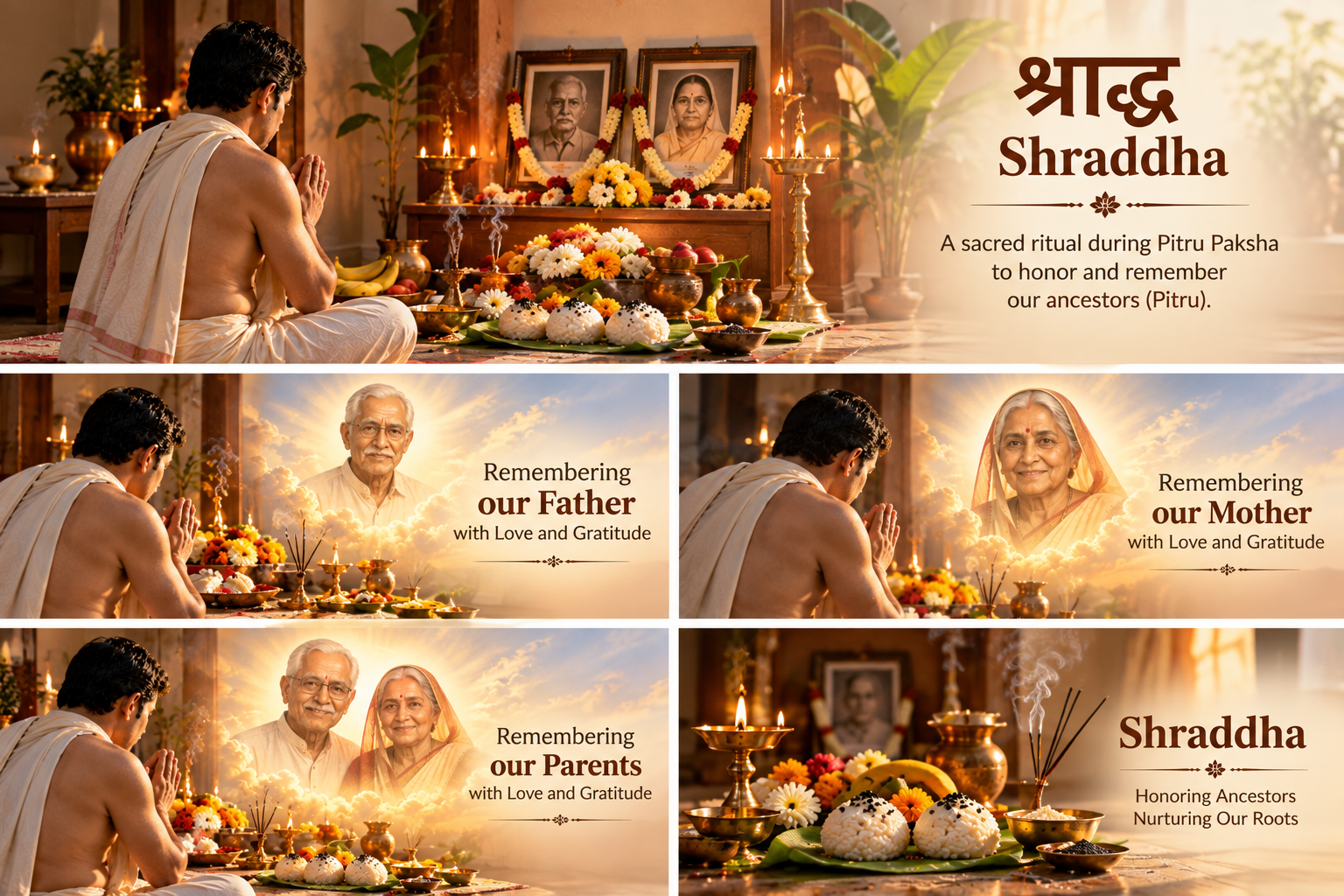
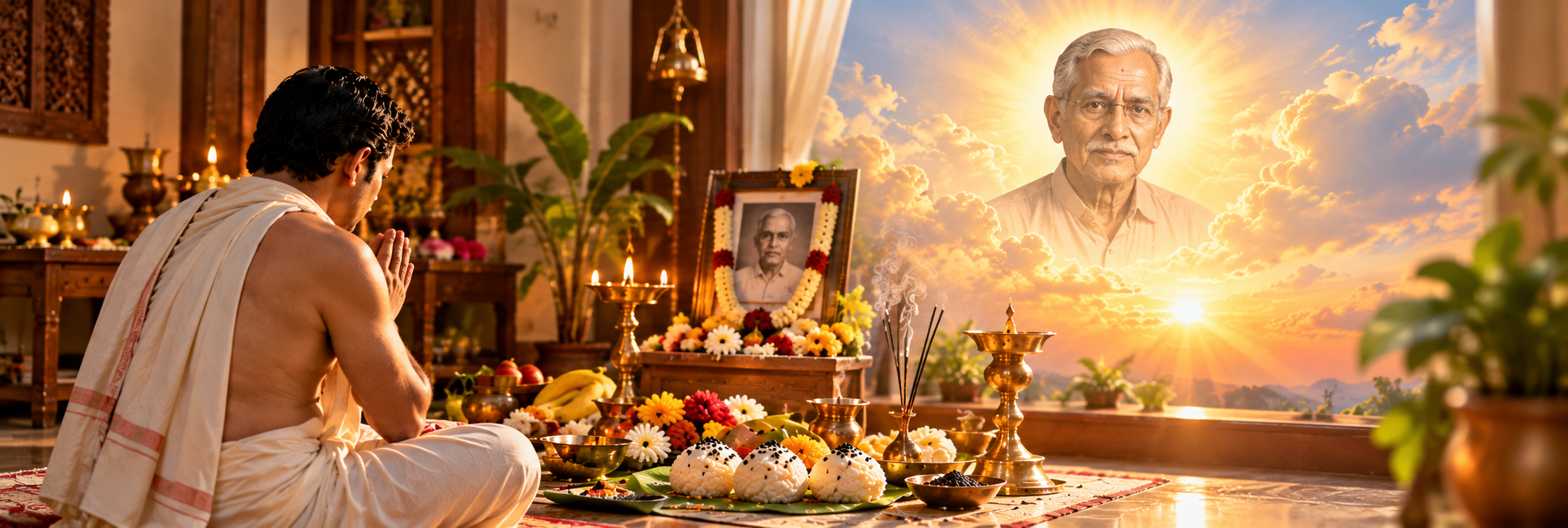
Śrāddhais a Hindu ancestral rite traditionally performed in memory of the deceased. It may involve offerings of water and food, remembrance of ancestors, feeding others, charity, prayer and rites conducted according to family or regional custom.
Religious reference works describe Shraddha as part of a much broader ancestral-rite tradition that is not limited to Pitru Paksha. Shraddha may be associated with post-funeral rites, annual death-anniversary observances based on the lunar tithi, and the annual Pitru Paksha period.
Common ritual vocabulary includestarpana(offerings of water),pinda daan(offering pinda, commonly prepared from rice or other prescribed ingredients), and food or donations offered in memory of ancestors. Not every family performs every element, and procedures can vary substantially.
How Pitru Paksha and Shraddha overlap
The overlap is strong because Pitru Paksha is one of the most prominent annual periods for performing Shraddha. But the two concepts sit at different levels.
A useful analogy is thatPitru Paksha is like a season of observance, while Shraddha is an observance performed within that season. The analogy is imperfect, but it helps explain why a person may say “we are doing Shraddha during Pitru Paksha.”
Shraddha, however, is not confined to these days. Annual ancestral rites may also be observed on the deceased person's lunar death anniversary, and post-death rites have their own Shraddha-related traditions.
Pitru Paksha vs. Shraddha: key differences
| Question | Pitru Paksha | Shraddha |
|---|---|---|
| What is it? | An annual lunar fortnight associated with honoring ancestors. | An ancestral rite or observance performed for the deceased. |
| Is it a date or a ritual? | Primarily a calendar period. | Primarily a ritual tradition. |
| When does it occur? | Once each year during the designated Krishna Paksha. | During Pitru Paksha and also at other prescribed or family-observed times. |
| How long does it last? | Roughly a lunar fortnight, with the treatment of adjacent Purnima differing by Panchang and convention. | The duration depends on the particular rite and family practice. |
| How is the day chosen? | The overall period is determined from the lunar calendar. | Within Pitru Paksha, the ancestor's death tithi is commonly used when known. |
| Common alternate terms | Shraddha Paksha, Mahalaya Paksha, Pitri Paksha. | Shradh, Śrāddha; specific forms may have additional names. |
Why the death tithi matters
Traditional Pitru Paksha calendars list Shraddha bytithirather than by the ancestor's Gregorian death date. For example, a person whose death is remembered on Navami tithi may be honored on Navami Shraddha during Pitru Paksha.
This is one reason two families can perform Shraddha on different civil dates in the same year. Their ancestral tithis may be different : and the mapping of a tithi to a local civil day can also depend on location and the tithi's start and end times.
When the exact tithi is not known, many traditions give particular importance to the concluding Amavasya, commonly calledSarva Pitru Amavasya. Family custom should take precedence over a generic online schedule.
Purnima Shraddha and Sarva Pitru Amavasya
Purnima Shraddha
Purnima Shraddha is frequently shown immediately before the main Krishna Paksha sequence. Some published calendars group it with the annual Shraddha list, while stricter definitions distinguish the full-moon observance from the fifteen lunar days of Pitru Paksha itself. This is why different sites may appear to give a slightly different “start date.”
Sarva Pitru Amavasya
The Amavasya at the end of Pitru Paksha is widely known asSarva Pitru Amavasya,Mahalaya Amavasyaor by related regional names. It is a major concluding observance associated with remembering ancestors collectively and is especially significant in many families when a specific ancestral tithi is unknown or was not otherwise observed.
Common elements of Shraddha observance
There is no single universal household procedure. Regional schools, priests, lineages and family customs differ. Still, several themes recur across traditional descriptions.
Why Gaya, Prayagraj, Varanasi and other sacred places are associated with Shraddha
Hindu pilgrimage traditions have long connected sacred rivers and tirthas with ancestral rites. Places such asGaya,Varanasi (Kashi),Prayagraj,Haridwarand other pilgrimage centers are strongly associated with pinda daan, tarpana and remembrance of ancestors.
These pilgrimage practices are distinct from the basic definition of Pitru Paksha: a family does not have to travel to a famous tirtha for the period to be meaningful. Many households observe Shraddha at home or locally, following their own tradition.
Related terms you may see
Frequently asked questions
Are Pitru Paksha and Shraddha the same thing?
No. Pitru Paksha is the annual lunar period associated with ancestral remembrance. Shraddha is the rite or observance performed for ancestors. Shraddha is strongly associated with Pitru Paksha but is not limited to it.
Why do people call Pitru Paksha “Shraddha”?
Because Shraddha is the central ancestral observance associated with the period, everyday speech often uses “Shraddha days” or “Shradh Paksha” as shorthand for Pitru Paksha.
Is Pitru Paksha always 15 days?
It is fundamentally a lunar-paksha observance, but civil-calendar presentations can look like 15 or 16 listed dates depending on whether Purnima Shraddha is displayed with the sequence and how tithis fall across sunrise and civil dates.
Do all ancestors have Shraddha on the same day?
No. Many calendars assign Shraddha according to the ancestor's death tithi. Sarva Pitru Amavasya provides a widely observed concluding day with broader ancestral significance.
Can Shraddha be performed outside Pitru Paksha?
Yes. Hindu ancestral-rite traditions include annual death-tithi observances and post-funeral Shraddha rites in addition to Pitru Paksha.
Why do dates vary by city?
Tithis are astronomical-lunar divisions whose start and end times can interact differently with local sunrise and local civil time. A location-specific Panchang should be used for exact observance dates and timings.
Sources and further reading
This explainer summarizes commonly documented Hindu ancestral traditions while recognizing regional and family variation.
Drik Panchang : Shraddha basic information and Pitru Paksha calendar conventionsEncyclopedia.com : Hindu Ancestor RitualsConcise Oxford Dictionary of World Religions via Encyclopedia.com : ŚrāddhaEncyclopedia.com : Hindu pilgrimage and ancestral ritesHow Long Is Pitru Paksha and Why Does It Last a Fortnight?
How Long Is Pitru Paksha and Why Does It Last a Fortnight is best understood within the broader tradition of ancestor remembrance. Family custom, regional usage and sampradaya can shape how the idea is expressed in practice.
Why Is Pitru Paksha Observed? Meaning and Cultural Significance
Why Is Pitru Paksha Observed? Meaning and Cultural Significance is best understood within the broader tradition of ancestor remembrance. Family custom, regional usage and sampradaya can shape how the idea is expressed in practice.
What Is Shraddha? Meaning, Purpose and Hindu Ancestral Traditions
What Is Shraddha? Meaning, Purpose and Hindu Ancestral Traditions is best understood within the broader tradition of ancestor remembrance. Family custom, regional usage and sampradaya can shape how the idea is expressed in practice.
Pitru Paksha: when the heart bows to its origins.
Shraddha vs Pitru Paksha: What Is the Difference?
Shraddha vs Pitru Paksha: What Is the Difference is best understood within the broader tradition of ancestor remembrance. Family custom, regional usage and sampradaya can shape how the idea is expressed in practice.
Pitru Paksha: Complete Guide to Meaning, Traditions and Shraddha Rituals
Pitru Paksha: Complete Guide to Meaning, Traditions and Shraddha Rituals is best understood within the broader tradition of ancestor remembrance. Family custom, regional usage and sampradaya can shape how the idea is expressed in practice.
Why Do Families Perform Shraddha for Ancestors?
Why Do Families Perform Shraddha for Ancestors is best understood within the broader tradition of ancestor remembrance. Family custom, regional usage and sampradaya can shape how the idea is expressed in practice.
The Spiritual Meaning of Remembering Ancestors During Pitru Paksha
The Spiritual Meaning of Remembering Ancestors During Pitru Paksha is best understood within the broader tradition of ancestor remembrance. Family custom, regional usage and sampradaya can shape how the idea is expressed in practice.
Shraddh is not ritual alone; it is love made visible.
What Does Pitru Mean in Hindu Tradition?
What Does Pitru Mean in Hindu Tradition is best understood within the broader tradition of ancestor remembrance. Family custom, regional usage and sampradaya can shape how the idea is expressed in practice.
What Happens During Pitru Paksha? A Beginner’s Guide
What Happens During Pitru Paksha? A Beginner’s Guide is best understood within the broader tradition of ancestor remembrance. Family custom, regional usage and sampradaya can shape how the idea is expressed in practice.
Pitru Paksha for Beginners: Customs, Etiquette and Common Questions
Pitru Paksha for Beginners: Customs, Etiquette and Common Questions is best understood within the broader tradition of ancestor remembrance. Family custom, regional usage and sampradaya can shape how the idea is expressed in practice.
Pitru Paksha Traditions: Tarpan, Pind Daan, Food Offerings and Remembrance
Pitru Paksha Traditions: Tarpan, Pind Daan, Food Offerings and Remembrance is best understood within the broader tradition of ancestor remembrance. Family custom, regional usage and sampradaya can shape how the idea is expressed in practice.