Ganesh Chaturthi guide for Maharashtra & Rajasthan families
21-page festival hub|गणपती बाप्पा मोरया
Mythology & History • Article 4 of 20

Why Modak Is Ganesha’s Favorite Sweet

Maharashtra traditions • Rajasthan context • practical celebration guidance

Few foods are as closely identified with a deity as modak is with Ganesha. The pleated dumpling appears in festival offerings, temple iconography, family recipes, and children’s stories. Its importance comes from both devotional folklore and the way its ingredients symbolize sweetness, nourishment, and the reward of spiritual effort.

गणपती बाप्पा मोरया!
मंगलमय गणेशोत्सवाच्या हार्दिक शुभेच्छा.

गणपति बप्पा मोरया!
गणेश चतुर्थी की हार्दिक शुभकामनाएँ.

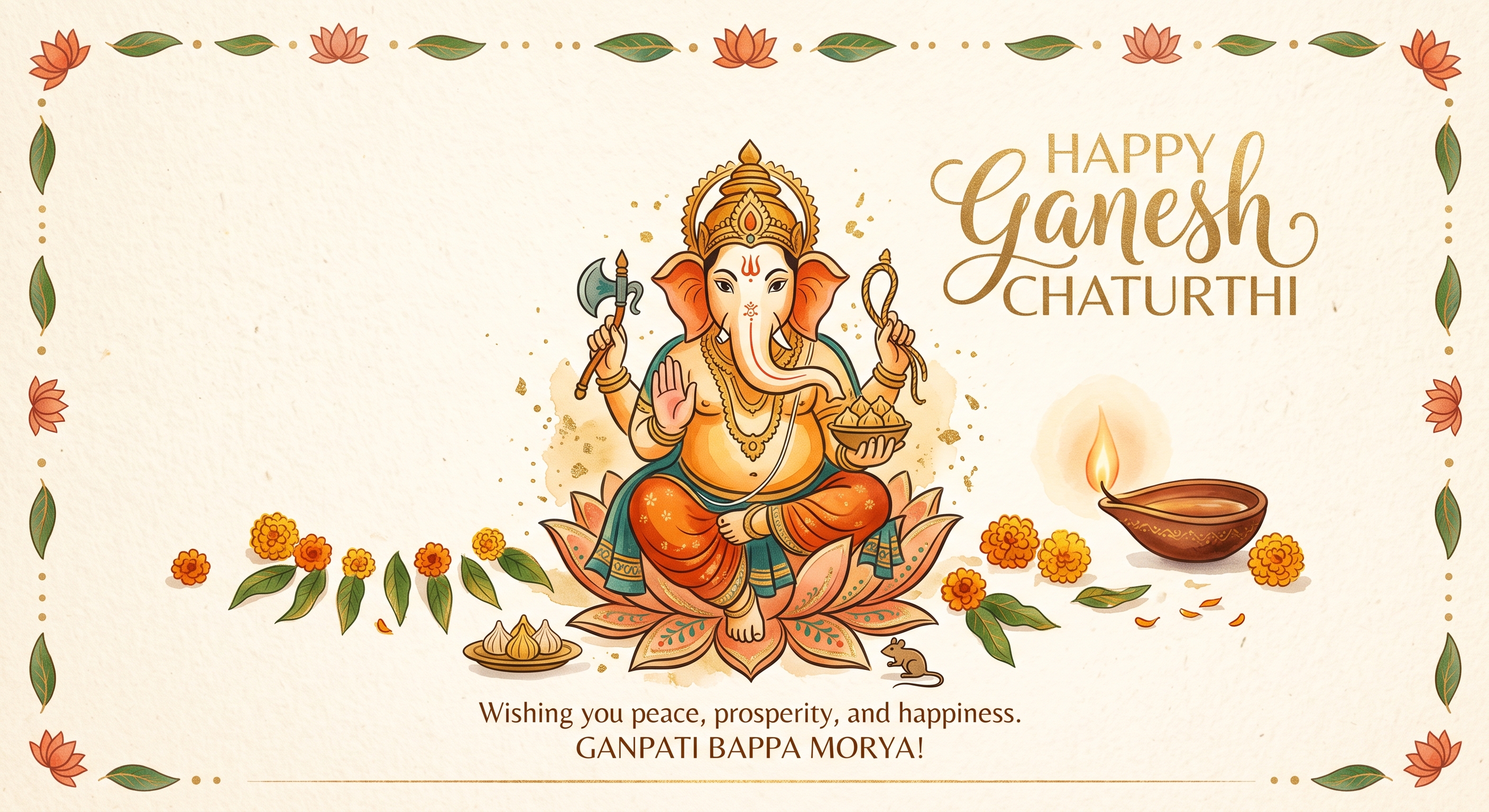
Ganesh Chaturthi devotional artwork for Why Modak Is Ganesha’s Favorite Sweet
Ganesh Chaturthi visual used as part of this regional festival guide.
Maharashtra & Rajasthan Lens

Make the guide feel local

Ganesh traditions are not identical across India. These notes highlight Maharashtra’s Ganeshotsav culture while giving Rajasthan readers relevant devotional and practical context.

Maharashtra

गणपती बाप्पा मोरया

In Maharashtra, modak is inseparable from Ganpati. Ukadiche modak: steamed rice-flour shells filled with coconut and jaggery: are especially iconic, while fried versions and modern flavors also appear in homes and sweet shops. For many families, the aroma of steaming modak is as much a marker of Ganeshotsav as the aarti itself.

Rajasthan

Ganesh devotion in Rajasthan

Rajasthan has its own rich mithai culture, so a Ganesh Chaturthi table may comfortably place modak beside familiar flavors such as besan, dry fruits, mawa and cardamom. A regional adaptation can keep the symbolic modak form while using locally loved fillings, provided the offering suits the family’s dietary and ritual preferences.

Key takeaways

  • Modak is a traditional offering closely associated with Ganesha in western and southern India.
  • Stories explaining Ganesha’s fondness for modak vary; many emphasize wisdom, satisfaction, and the sweetness of knowledge.
  • Steamed ukadiche modak, fried modak, and many modern variations all belong to a living culinary tradition.

The sweet in Ganesha’s hand

Ganesha is frequently depicted holding a sweet, often identified as a modak or laddu. The image reinforces his affectionate title Modakapriya: one who delights in modak. During Ganesh Chaturthi, households commonly prepare or purchase modaks as naivedya, food offered to the deity before being shared as prasad.

The association is particularly strong in Maharashtra, where steamed ukadiche modak are a festival classic, but related dumplings and sweet offerings appear across many regions.

Folklore about wisdom and satisfaction

Several stories explain why the sweet is dear to Ganesha. In one family of legends, a divine sweet is offered as a prize connected with wisdom or worthiness, and Ganesha receives it through insight rather than physical speed. Other tellings focus simply on his delight in the food.

Because these stories circulate orally and in devotional retellings, details differ. What stays consistent is the pairing of Ganesha with intelligent discernment and the reward of inner understanding.

Why the shape matters

A traditional modak has a rounded base and pointed, pleated top. Devotional interpretation sometimes compares the outer shell with disciplined effort and the sweet filling with the joy or knowledge discovered within. It is a fitting metaphor for study, meditation, or any difficult task whose reward is not visible at first.

The coconut-jaggery filling also reflects the tropical pantry of western and southern India. Cardamom, nutmeg, ghee, sesame, or nuts may be added depending on the household.

Twenty-one modaks and festival offering

Many families offer 21 modaks, a number that appears in Ganesha worship traditions. Not every household follows the same count, and there is no need to turn devotion into a numerical test. A smaller homemade offering given with care is equally meaningful within many family practices.

After the ritual, the modaks are shared. That movement: from kitchen labor, to sacred offering, to communal food: is part of what gives festival cooking its emotional power.

Frequently Asked Questions

Use family, temple and local-authority guidance where a ritual or public celebration differs by place.

Is modak always steamed?

No. Ukadiche modak are steamed, but fried versions and versions made with mawa, chocolate, dry fruit, millet, or other ingredients are also common.

Why are 21 modaks offered?

Twenty-one is a traditional number in many Ganesha worship practices, though household customs vary.

Can store-bought modak be offered?

Many families do so. Devotional practice differs, but sincerity and cleanliness are generally more important than whether the sweet was made at home.

Ganesh Chaturthi Series

Continue exploring